



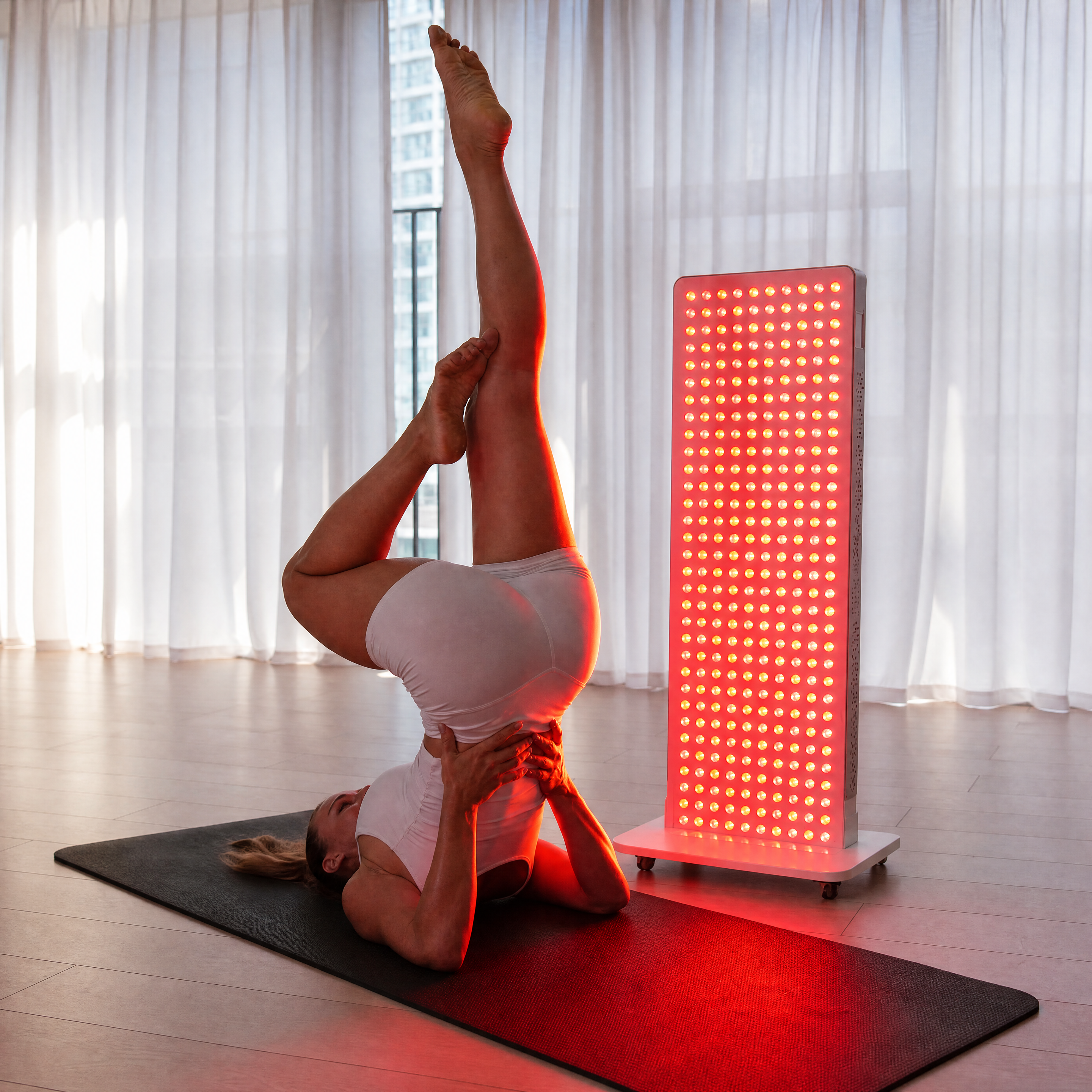
Don't waste money on ineffective devices. Discover the 5 essential features you must look for when choosing a red light therapy panel for home use, including irradiance, wavelengths, and EMF levels.
Investing in a red light therapy panel is a significant step toward optimizing your daily wellness and skincare routine. However, the market is flooded with devices that promise miraculous results but deliver subpar performance. To ensure you are investing in a device that actually works, you must look beyond the marketing claims and evaluate the technical specifications. Here are the five critical factors you must check before buying a red light therapy panel.
1. Irradiance (Power Output)
Irradiance measures how much light energy is delivered to your body over a specific area, usually expressed in milliwatts per square centimeter (mW/cm²). A higher irradiance means the panel can deliver an effective dose of light in a shorter amount of time. Look for panels that offer an irradiance of at least 100mW/cm² at a distance of 6 inches. Devices with dual-chip LEDs, rather than single-chip, typically provide superior and more consistent power output.
2. Wavelength Variety
As discussed in our wavelength guide, the specific colors of light matter. A basic panel will offer 660nm (Red) and 850nm (Near-Infrared). However, premium panels offer a broader spectrum to target multiple tissue depths simultaneously. Seek out devices that offer a combination of 630nm, 660nm, 810nm, 830nm, and 850nm for the most comprehensive cellular activation.
3. Low EMF Emissions
Electromagnetic Fields (EMFs) are emitted by almost all electronic devices. Because you will be standing close to your red light panel on a regular basis, it is crucial that the device emits zero or near-zero EMFs at the treatment distance. Always check that the manufacturer explicitly states their EMF levels and guarantees safety.
4. FDA Clearance and Safety Certifications
Never compromise on safety. Ensure the panel you choose is manufactured in an FDA-registered facility and holds relevant safety certifications (such as CE or ETL/UL). An FDA Class II classification indicates that the device meets stringent regulatory standards for safety and efficacy.
5. Warranty and Trial Period
A reputable brand will stand behind its product. Look for a minimum of a 2-year warranty (ideally 3 years) and a risk-free trial period. A 60-day trial allows you to experience the benefits firsthand and ensures you are not stuck with a device that doesn't meet your expectations.
The HILAX HilaxPro 350 was designed with these five pillars in mind. It boasts an exceptional >170mW/cm² irradiance via dual-chip LEDs, a 5-wavelength spectrum, zero EMF emissions at 6 inches, FDA Class II verification, and is backed by a 60-day trial and a 3-year warranty—all for an accessible $399.
Share:
How Often And How Long Should I Use Hilax Panel?
How Often Should You Use Red Light Therapy? A Complete Beginner's Guide